Free, no sign-up. The Word file opens in Microsoft Word, Google Docs and Pages.
Quote, estimate or invoice?
| Quote | Estimate | Invoice | |
|---|---|---|---|
| Price | Fixed | A range | What is owed |
| When | Before work, to win it | Before work, when scope is unclear | After work, or per milestone |
| Binding? | Yes, once accepted | No, it can change | It is a request to pay |
Use a quote when you can define the work clearly. If you can't, send an estimate instead.
What goes on a quote
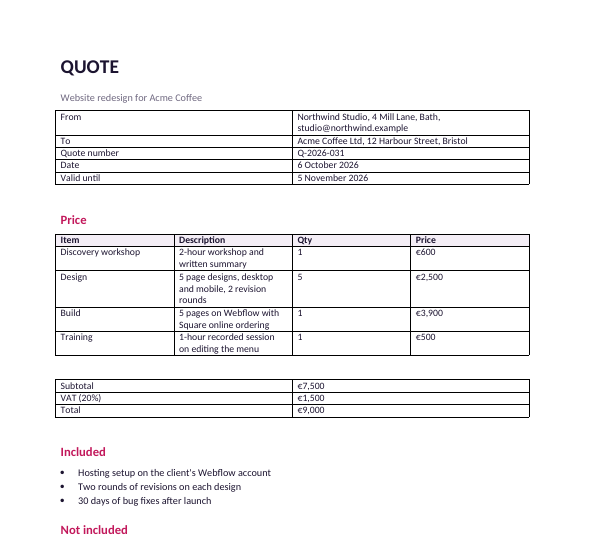
The filled-in example is a €7,500 website for a coffee shop. Each part, in order:
- Who and when: your details, the client's, a quote number, the date and a valid until date.
- One line per deliverable with a fixed price: discovery workshop €600, design €2,500, build €3,900, training €500. Clients compare lines, so name them the way the client thinks about the work, not the way you schedule it.
- Subtotal, tax and total. Show the tax separately so business clients can reclaim it.
- Included. Two or three things that make the price look fair: revision rounds, 30 days of bug fixes.
- Not included. The things the client might assume: copywriting, photography, subscription fees.
- Payment terms: 40% to start, 30% at design approval, 30% at launch.
- How to accept: a signature line, or "reply in writing", and that work starts when the deposit is paid.
Lines that get quotes accepted faster
- A short validity period. "Valid until 5 November" gives the client a reason to decide.
- A deposit to start. It filters out clients who were never going to sign.
- The "not included" list. It looks like small print, but it is what stops the price being argued later.
- One page. If the quote needs more, the detail belongs in a statement of work.
Send the quote as a link
You get an email when the client opens your quote, on the free plan, if you share it as a Snapy.host link instead of attaching it. With Pro you see how long they spent on the price lines, which tells you when to follow up. Need the follow-up words? See the follow-up email templates.