Free, no sign-up. The Word file opens in Microsoft Word, Google Docs and Pages.
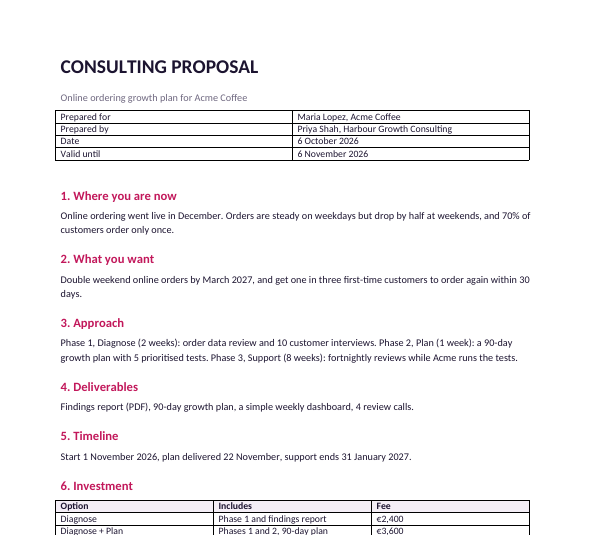
The 7 sections
The filled-in example is a growth plan for a coffee shop's online ordering.
| Section | What it does | From the example |
|---|---|---|
| Where you are now | Shows you listened | Weekend orders drop by half; 70% order only once |
| What you want | Measurable goals | Double weekend orders by March |
| Approach | Phases with outputs | Diagnose, Plan, Support |
| Deliverables | What they will hold | Findings report, 90-day plan, dashboard |
| Timeline | Start, key dates, end | 1 Nov to 31 Jan |
| Investment | Two or three options | €2,400 / €3,600 / €5,800 |
| Next steps | How to say yes | Reply with an option; agreement follows in a day |
Three options, so they choose which, not whether
| Option | Includes | Fee |
|---|---|---|
| Diagnose | Interviews, data review, findings | €2,400 |
| Diagnose + Plan | Plus a 90-day plan | €3,600 |
| Full | Plus 8 weeks of support | €5,800 |
The smallest option lowers the risk of saying yes. The largest shows what full support looks like. Most clients pick the middle, so make that the one you most want to deliver.
Write "where you are now" first
It is the section clients read most closely, because it is about them. Use their words from the first call, and include one number. If you can't write it, you need another conversation before you write the proposal.
After the proposal
When the client picks an option, send a statement of work for it. If they go quiet, the follow-up email templates cover the next three weeks.
Know when they read it
Share the proposal as a Snapy.host link and you get an email the moment the client opens it, on the free plan. With Pro you see how long they spent on the investment page, so you know when to follow up.